




-
How it works

-
Industries
-
Services
-
Material
-
Company
-
Resources
 sushant@iamrapid.com
 +91
8629044664
+91
8629044664








 Basic
Industries
Services
Resources
Basic
Industries
Services
Resources
PLA is the most popular 3D printing material for rapid prototyping, known for its ease of use, biodegradability, and excellent surface finish. As a leading PLA filament for 3D printing provider in India, iamRapid uses this eco-friendly thermoplastic in FDM 3D printing to deliver high-quality prototypes, educational models, and concept parts.
Available via FDM at iamRapid
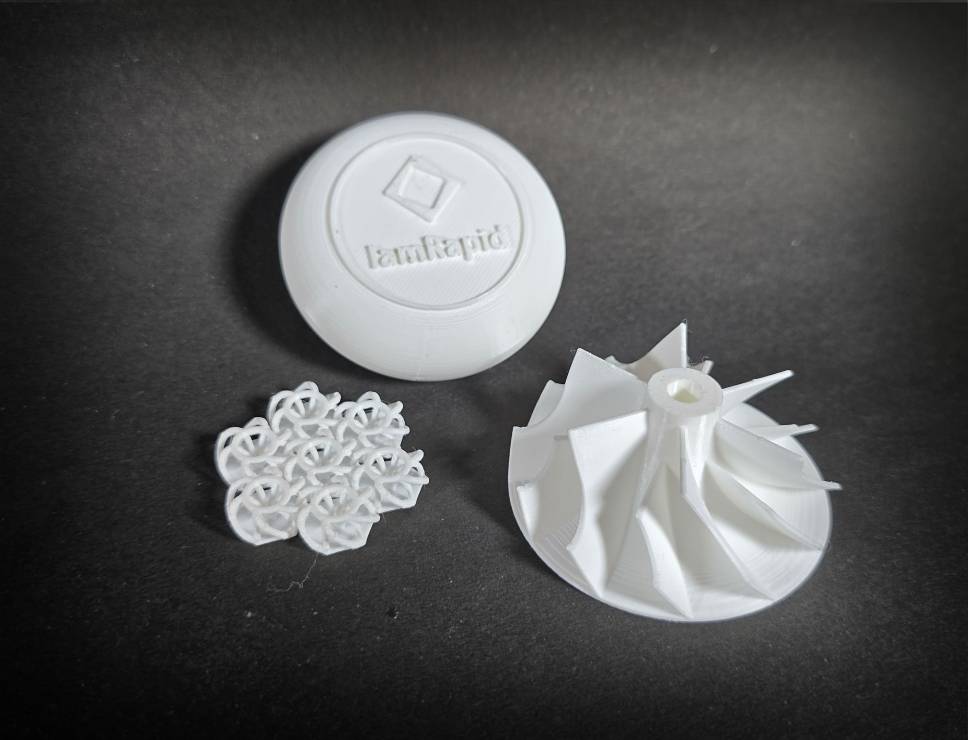
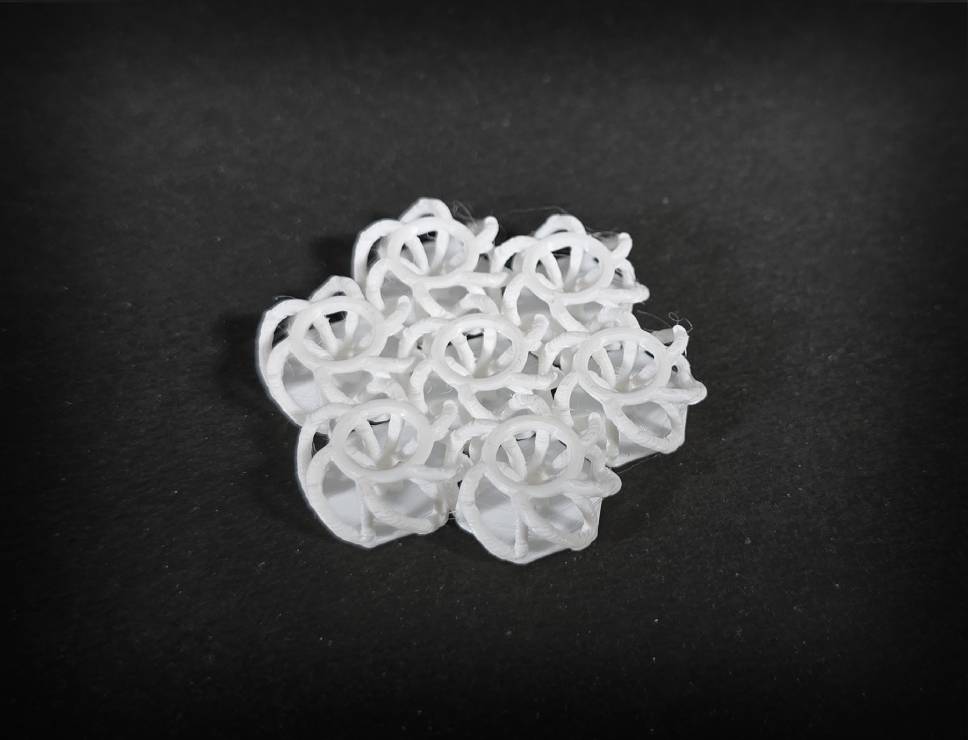
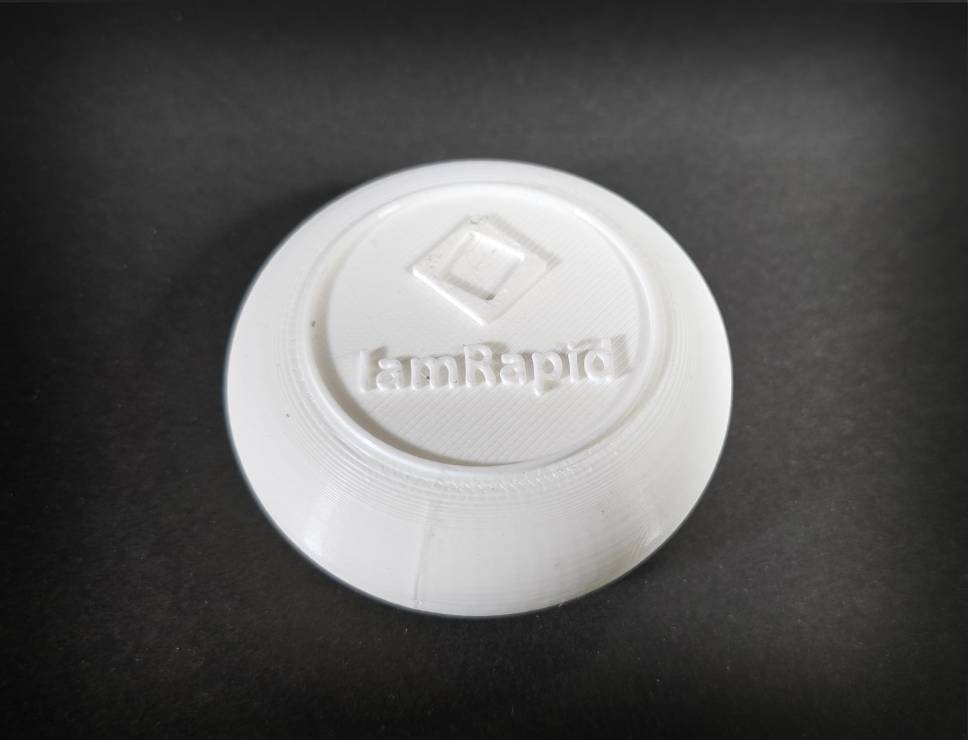


PLA (Polylactic Acid) is a biodegradable thermoplastic derived from renewable resources like cornstarch or sugarcane, making it the most widely used PLA 3D printing material worldwide. It is ideal for FDM 3D printing due to its low printing temperature, minimal warping, and ease of use. PLA filament for 3D printing produces parts with a smooth surface finish and good tensile strength, perfect for detailed prototypes, aesthetic models, and educational projects. Order PLA 3D prints in India through iamRapid for fast turnaround on concept models and visual prototypes. While PLA is not as heat-resistant or impact-resistant as materials like ABS, it remains a top choice for applications where mechanical stress is minimal.


 FDM compatibleEasy to PrintBiodegradableMinimal WarpingGood Surface Finish
 Low Heat ResistanceBrittle Compared to Other
PlasticsLimited Mechanical Strength
Not Suitable for High-Stress
Applications
Low Heat ResistanceBrittle Compared to Other
PlasticsLimited Mechanical Strength
Not Suitable for High-Stress
Applications
Key ABS properties rated to guide you in selecting the best fit for your 3D printing needs.
PLA is ideal for creating prototypes, concept models, decorative items, and educational tools where ease of printing and visual appeal are prioritized over mechanical performance. Its low warping tendency and biodegradability make it suitable for hobbyist projects and classroom settings.
Classroom modelsEducational toolStudent projectsConcept modelsVisual prototypesForm and fit testingSculpturesDecorative piecesArchitectural modelsToys and figurinesHousehold itemsPromotional itemsRapid PrototypingLow-Stress Functional PartsHobbyist ProjectsMold Patterns
Offers decent tensile strength with low flexibility, suitable for parts not subjected to mechanical stress.
| Property | Value, metric |
|---|---|
| Tensile Strength | Approximately 50 MPa |
| Tensile Modulus | Approximately 3,500 MPa |
| Elongation at Break (%) | 6% |
| Flexural Strength | Approximately 80 MPa |
| Flexural Modulus | Approximately 3,800 MPa |
| Notched Izod Impact Strength | Approximately 16 J/m |
| Shore Hardness | Shore D 83 |
Printing with PLA is straightforward and user-friendly, making it an excellent choice for beginners and professionals alike. It requires lower extrusion temperatures and does not necessitate a heated bed, though one can be used to improve adhesion. PLA has minimal warping and good layer adhesion, resulting in high-quality prints with fine details and smooth surfaces.
| Type | Value |
|---|---|
| Lead Time | 1-3 business days |
| Wall Thickness | Minimum 0.8 mm |
| Tolerance | ±0.15%, minimum ±0.1 mm |
| Max Part Size | Up to 450 x 450 x 450 mm |
| Layer Height | 0.05 mm to 0.3 mm |
Has a low heat resistance; parts may deform at relatively low temperatures.
| Property | Value, metric |
|---|---|
| Heat Deflection Temperature (HDT) | Approximately 55°C at 0.455 MPa |
| Thermal Expansion Coefficient | Approximately 68 x 10^-6 /°C |
| Thermal Expansion (Scale 0-100) | 60 |
| Max Service Temperature | Up to 50°C before significant deformation may occur |
Acts as an electrical insulator, suitable for non-conductive applications.
| Property | Value, metric |
|---|---|
| ESD Safety | Standard PLA is not ESD safe; special ESD-safe variants are rare. |
| Conductivity | Non-conductive; good insulating properties |
 NOTE: The provided
values are approximate and can vary
based on the specific PLA formulation and
manufacturer. Always refer to the manufacturer's technical data
sheet for precise information.
NOTE: The provided
values are approximate and can vary
based on the specific PLA formulation and
manufacturer. Always refer to the manufacturer's technical data
sheet for precise information.
| Property | PLA | ABS | PETG |
|---|---|---|---|
| Cost (₹/cm³) | ₹3-5 | ₹4-7 | ₹4-7 |
| Tensile Strength | 37 MPa | 40 MPa | 50 MPa |
| Heat Resistance | 60°C | 100°C | 80°C |
| Flexibility | Rigid, brittle | Tough, impact-resistant | Semi-flexible |
| Best For | Visual prototypes, models | Functional parts, housings | Outdoor, chemical exposure |
All available via FDM printing at iamRapid. Upload your CAD file for instant pricing.

