




-
How it works

-
Industries
-
Services
-
Material
-
Company
-
Resources
 sushant@iamrapid.com
 +91
8629044664
+91
8629044664








 Basic
Industries
Services
Resources
Basic
Industries
Services
Resources
Discover Tough PLA, a modified PLA material for FDM 3D printing offering enhanced impact resistance and durability while maintaining the ease of printing associated with standard PLA.
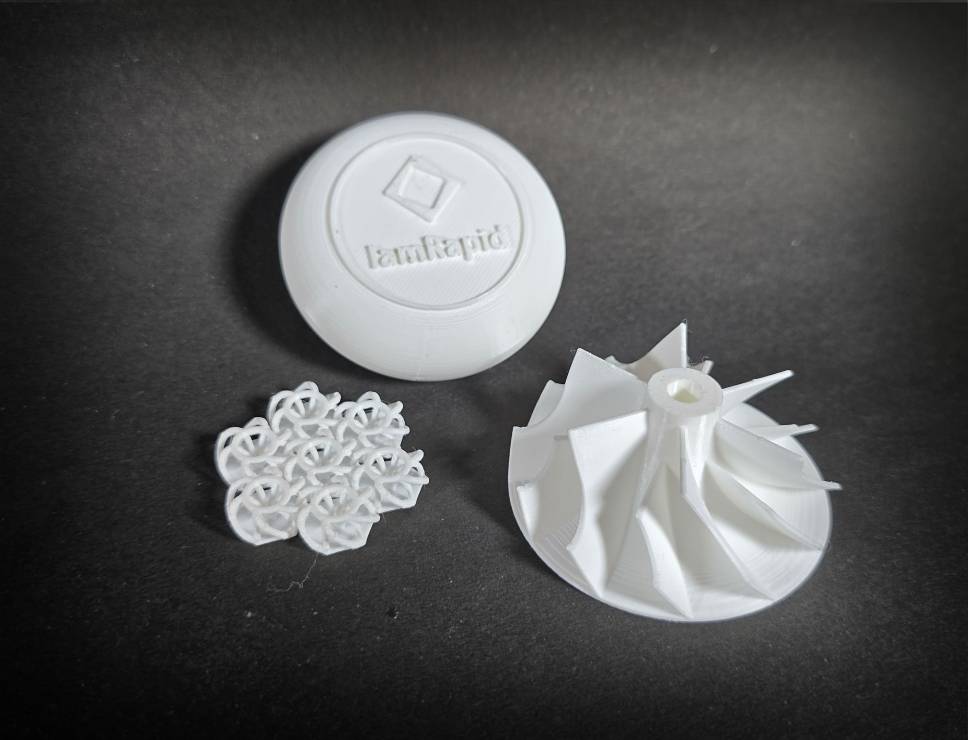
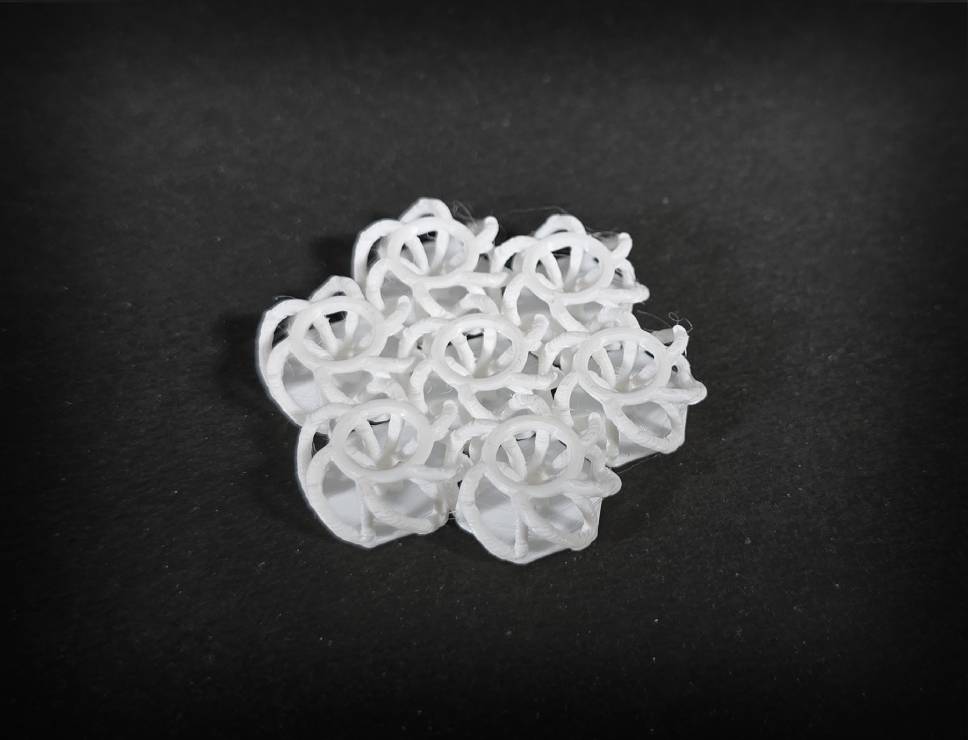
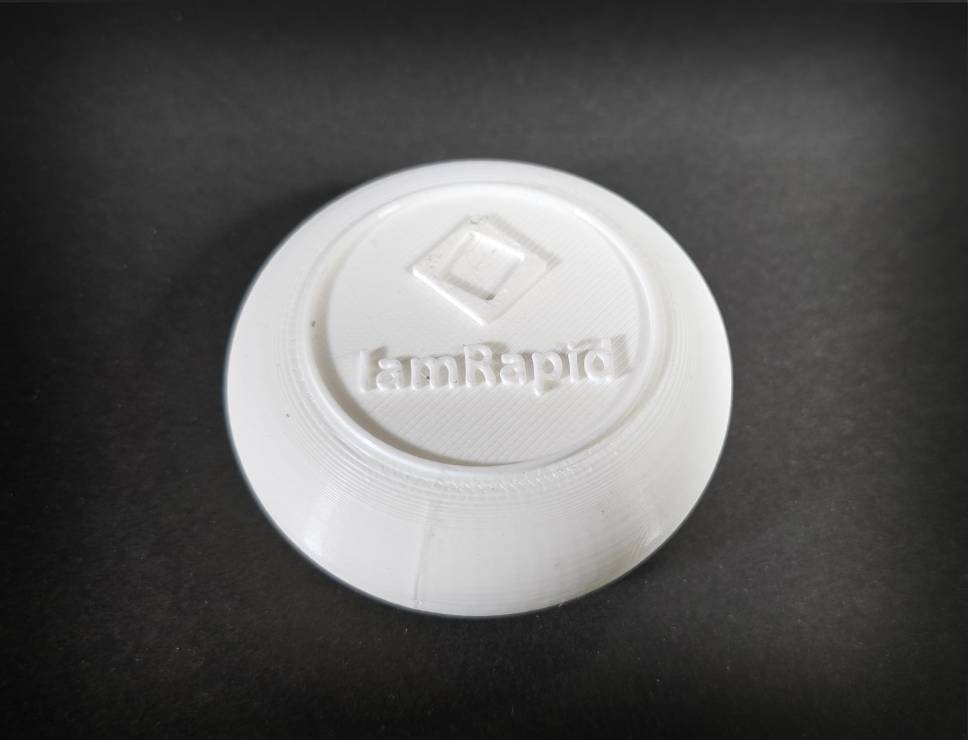


Tough PLA is a specially formulated version of standard Polylactic Acid (PLA) designed to offer increased toughness, impact resistance, and durability. By modifying the polymer structure or adding impact modifiers, Tough PLA achieves mechanical properties closer to those of ABS while retaining the user-friendly characteristics of PLA, such as low warping, minimal shrinkage, and ease of printing without a heated bed. It provides an excellent balance between strength and flexibility, making it suitable for functional prototypes, mechanical parts, and end-use applications that require enhanced durability. Tough PLA also maintains the biodegradability of standard PLA and produces parts with a smooth surface finish, accommodating post-processing techniques like sanding and painting. This material is ideal for users seeking improved mechanical performance without the printing challenges associated with materials like ABS or Nylon.


 FDM compatibleHigh Impact ResistanceEnhanced DurabilityEasy to PrintMinimal Warping
 Lower Heat Resistance Compared to
ABSSlightly Less Rigid Than Standard
PLANot Suitable for High-Temperature
ApplicationsLimited Chemical Resistance
Lower Heat Resistance Compared to
ABSSlightly Less Rigid Than Standard
PLANot Suitable for High-Temperature
ApplicationsLimited Chemical Resistance

Key Tough PLA properties rated to guide you in selecting the best fit for your 3D printing needs.
Tough PLA is ideal for producing durable prototypes, mechanical parts, and end-use components that require increased impact resistance and strength without the complexities of printing with materials like ABS. Its enhanced mechanical properties make it suitable for functional applications across various industries.
Prototype partsClips and fastenersInterior componentsDurable gadgetsProtective casesToy componentsFunctional modelsRobotics partsMechanical assembliesJigs and fixturesTooling componentsCustom equipment partsFunctional PrototypesMechanical PartsSnap-Fit PartsEnd-Use Products
Offers improved impact resistance and toughness compared to standard PLA, suitable for parts requiring durability and mechanical strength.
| Property | Value, metric |
|---|---|
| Tensile Strength | Approximately 50 MPa |
| Tensile Modulus | Approximately 2,700 MPa |
| Elongation at Break (%) | 20% |
| Flexural Strength | Approximately 80 MPa |
| Flexural Modulus | Approximately 2,500 MPa |
| Notched Izod Impact Strength | Approximately 120 J/m |
| Shore Hardness | Shore D 80 |
Printing with Tough PLA is straightforward and user-friendly, similar to standard PLA. It does not require a heated bed and exhibits low warping and good layer adhesion. Tough PLA allows for higher printing speeds and produces parts with a smooth surface finish. It is compatible with most FDM printers and is ideal for users seeking improved mechanical performance without additional printing challenges.
| Type | Value |
|---|---|
| Lead Time | 1-4 business days |
| Wall Thickness | Minimum 1.0 mm |
| Tolerance | ±0.15%, minimum ±0.1 mm |
| Max Part Size | Up to 450 x 450 x 450 mm |
| Layer Height | 0.05 mm to 0.3 mm |
Similar to standard PLA with moderate heat resistance; parts may deform at higher temperatures.
| Property | Value, metric |
|---|---|
| Heat Deflection Temperature (HDT) | Approximately 60°C at 0.455 MPa |
| Thermal Expansion Coefficient | Approximately 70 x 10^-6 /°C |
| Thermal Expansion (Scale 0-100) | 65 |
| Max Service Temperature | Up to 55°C before significant deformation may occur |
Acts as an electrical insulator; suitable for non-conductive applications.
| Property | Value, metric |
|---|---|
| ESD Safety | Not ESD safe |
| Conductivity | Non-conductive; insulating properties |
 NOTE: The provided
values are approximate and can vary
based on the specific Tough PLA formulation and
manufacturer. Always refer to the manufacturer's technical data
sheet for precise information.
NOTE: The provided
values are approximate and can vary
based on the specific Tough PLA formulation and
manufacturer. Always refer to the manufacturer's technical data
sheet for precise information.

