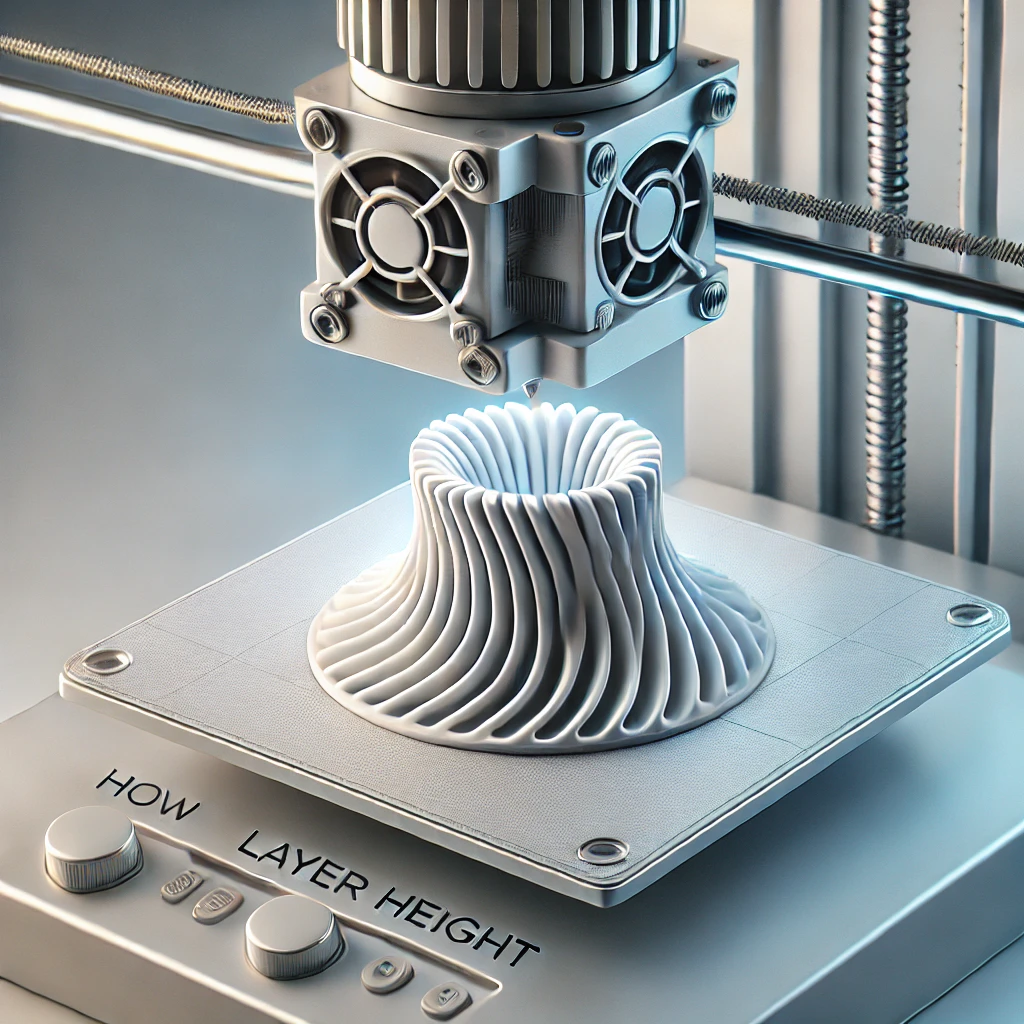
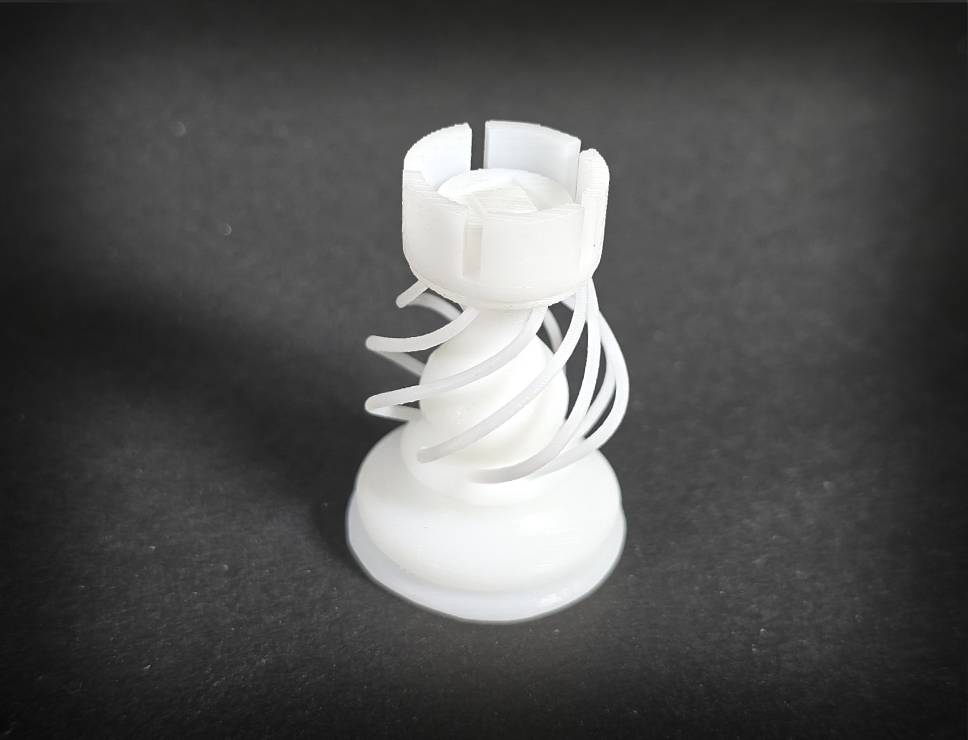
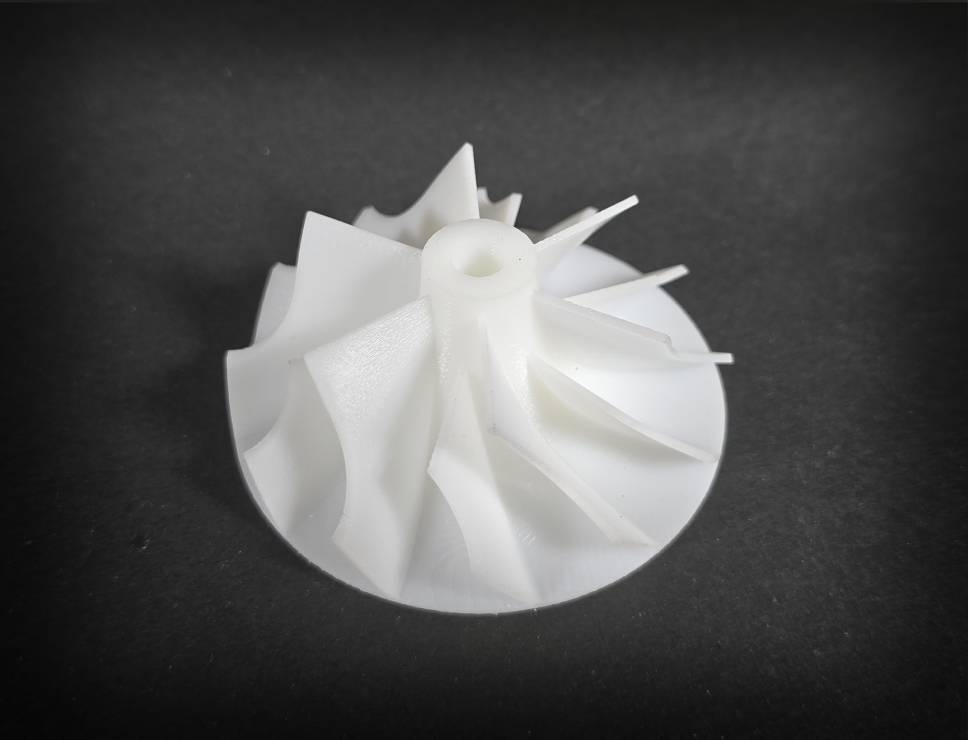
Experience the strength and precision of Rigid Resin—a glass-filled photopolymer resin designed for SLA 3D
printing, offering high stiffness and a polished finish, ideal for producing parts that require rigidity,
dimensional stability, and resistance to deformation under load.
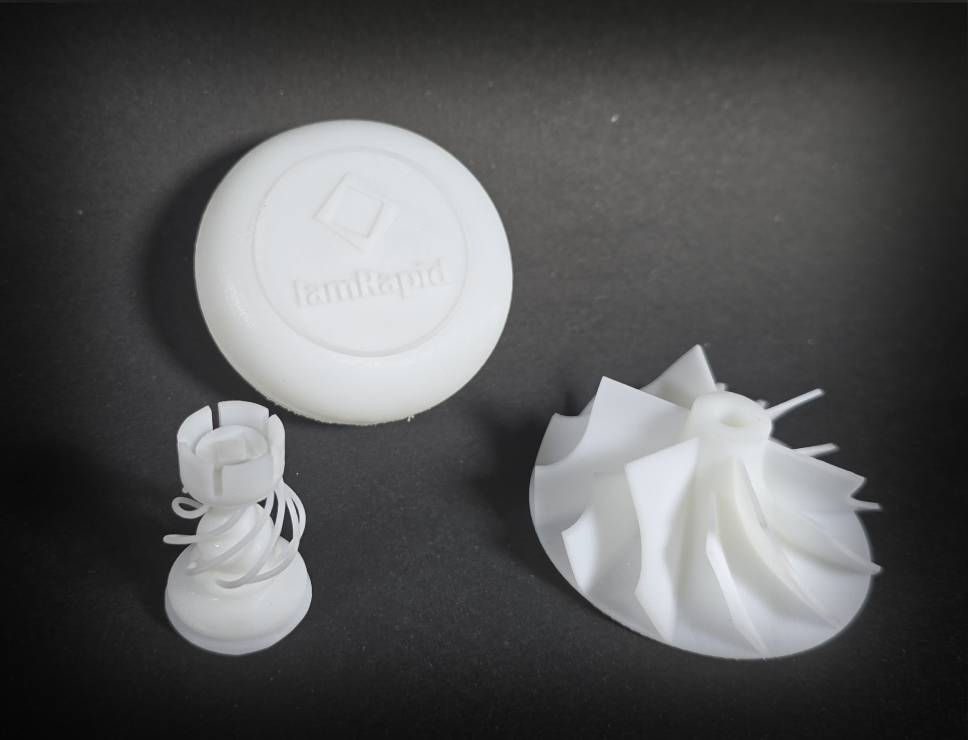
Material Name:
Rigid Resin
Description:
Rigid Resin is a glass-filled photopolymer resin that provides high stiffness and resistance to
deformation. Reinforced with glass particles, it offers a high modulus and polished surface finish. This
resin is ideal for producing parts that require rigidity and dimensional stability, such as housings,
fixtures, and structural components. It maintains accuracy under load and is less prone to creep compared
to standard resins.
Material Type:
Glass-Filled Photopolymer Resin
Price:
Available color:
Gray
White
Process compatibility:
SLA compatible
DLP compatible
Special Properties:
High Stiffness and Rigidity
Glass-Filled for Enhanced Strength
Polished Surface Finish
Good Dimensional Stability
Limitations:
Brittle Nature
Requires Post-Curing
Abrasive to Printer Components
UV Sensitivity
Material rating
Key High Temp Resin properties rated to guide you in selecting the best fit for your 3D printing needs.
Strength4 of 5
Flexibility1 of 5
Detail Resolution4 of
5
Surface Smoothness5 of
5
Heat Resistance3 of 5
Chemical Resistance3 of
5
Ease of Printing3 of 5
Cost Efficiency2 of 5
Applications
Rigid Resin is ideal for producing parts that require high stiffness and dimensional
accuracy. It's suitable for engineering applications where parts must maintain their shape under load.
Engineering and Manufacturing Applications
Jigs and fixtures
Structural prototypes
Precision assemblies
Automotive and Aerospace Applications
Wind tunnel testing models
Structural components
Mounting brackets
Consumer Products Applications
Electronic housings
Appliance parts
Structural enclosures
Industrial Applications
Fluid and air flow components
Manifolds
Functional prototypes
Additional Applications
Metrology Components
Gear Prototypes
Load-Bearing Parts
Mechanical Properties
Offers high stiffness and resistance to deformation, suitable for parts that require structural integrity.
Property
Value, metric
Tensile Strength
Approximately 75 MPa
Tensile Modulus
Approximately 4,000 MPa
Elongation at Break (%)
2%
Flexural Strength
Approximately 120 MPa
Flexural Modulus
Approximately 4,000 MPa
Notched Izod Impact Strength
Approximately 25 J/m
Shore Hardness
Shore D 84
Characteristics
Printing with Rigid Resin may require adjusted exposure settings due to its glass
content. An all-metal resin tank is recommended to prevent wear. Post-processing includes thorough cleaning
and UV curing to achieve maximum mechanical properties.
Type
Value
Lead Time
2-5 business days
Wall Thickness
Minimum 0.8 mm
Tolerance
±0.1%, minimum ±0.05 mm
Max Part Size
Up to 600x 600 x 450 mm
Layer Height
-
Thermal Properties
Moderate heat resistance; maintains dimensional stability under moderate temperatures.
Property
Value, metric
Heat Deflection Temperature (HDT)
Approximately 75°C at 0.455 MPa
Thermal Expansion Coefficient
Approximately 50 x 10^-6 /°C
Thermal Expansion (Scale 0-100)
60
Max Service Temperature
Up to 70°C before significant deformation may occur
Electrical Properties
Acts as an electrical insulator; suitable for non-conductive applications.
Property
Value, metric
ESD Safety
Not ESD safe
Conductivity
Non-conductive; insulating properties
NOTE: The provided
values are approximate and can vary
based on the specific Rigid Resin formulation and
manufacturer. Always refer to the manufacturer's technical data
sheet for precise information.
Find your queries
Frequently Asked Question(FAQ)
General
Printing
Post-procesing
Troubleshooting
Advanced
What is Rigid Resin, and what are its main characteristics?
Rigid Resin is a glass-filled photopolymer resin designed for SLA 3D printing. It offers high
stiffness, a polished surface finish, and resistance to deformation under load due to the inclusion
of glass particles.
How does Rigid Resin compare to standard resin?
Rigid Resin provides higher stiffness and dimensional stability compared to standard resins. The
glass filler increases the material's modulus, making it less prone to bending or
deformation.
Is Rigid Resin suitable for functional prototypes and end-use parts?
Yes, it's ideal for creating functional prototypes and end-use parts that require rigidity and
dimensional accuracy, such as housings, fixtures, and structural components.
Does Rigid Resin require special storage conditions?
Store Rigid Resin in a cool, dark place away from direct sunlight and UV light sources. Keep the
container sealed tightly to prevent contamination and degradation.
What colors are available for Rigid Resin?
Rigid Resin is typically available in white or gray, which helps in highlighting fine details
and is suitable for various applications.
Are there any special considerations when printing with Rigid Resin?
Yes, due to its glass content, Rigid Resin is more viscous and may require adjusted exposure
settings. An all-metal resin tank is recommended to prevent wear from the abrasive glass
particles.
What layer height is recommended for printing with Rigid Resin?
Layer heights between 50-100 microns are recommended, balancing detail resolution and print
speed.
Do I need to adjust exposure settings for Rigid Resin?
Yes, you may need to increase exposure times to ensure proper curing due to the resin's opacity
and glass content. Consult the manufacturer's guidelines for optimal settings.
Can Rigid Resin wear out printer components?
Yes, the glass particles can be abrasive, potentially causing increased wear on resin tanks and
other components. Using durable, compatible printer parts is recommended.
Is an open or closed resin system better for printing with Rigid Resin?
Either system can be used, but ensure that printer components are compatible with abrasive
materials and that resin is protected from light exposure.
How should I handle Rigid Resin prints during post-processing?
Handle prints carefully to avoid chipping or cracking, as Rigid Resin can be more brittle than
standard resins. Use gloves to protect your skin from uncured resin.
How long should I UV cure Rigid Resin prints?
Curing times of 30-60 minutes are recommended to achieve full mechanical properties. Use a UV
curing station with appropriate settings.
Can Rigid Resin prints be painted or finished?
Yes, they can be sanded, primed, and painted using paints suitable for plastics. The polished
surface finish aids in achieving high-quality finishes.
How do I remove support structures without damaging the print?
Use sharp tools to carefully cut supports, and gently sand any remaining marks. Be cautious to
prevent chipping due to the resin's brittleness.
Can Rigid Resin prints be machined or drilled?
Due to its brittle nature, machining should be done cautiously, using appropriate tools and
methods to avoid cracking.
Why are my Rigid Resin prints exhibiting surface defects?
Surface defects can result from resin contamination, incorrect exposure settings, or issues with
printer calibration. Ensure the resin is well-mixed and clean, and adjust settings as
necessary.
What causes warping or deformation in Rigid Resin prints?
Warping can occur due to internal stresses or insufficient support structures. Ensure proper
support placement and consider adjusting the print orientation.
How do I prevent layer separation in my prints?
Layer separation can result from underexposure or mechanical issues with the printer. Verify
that exposure times are adequate and that the printer is functioning correctly.
Why are my prints more brittle than expected?
Incomplete curing or incorrect exposure settings can affect the material's properties. Ensure
proper UV curing and verify that printer settings align with the manufacturer's
recommendations.
How do I fix prints adhering too strongly to the build platform?
Adjust the initial layer settings or use a release agent on the build platform to prevent
excessive adhesion.
Can Rigid Resin be mixed with other resins to adjust properties?
Mixing resins is generally not recommended as it can lead to unpredictable results and may
compromise material properties.
Is Rigid Resin suitable for high-temperature applications?
Rigid Resin has moderate heat resistance, with a Heat Deflection Temperature (HDT) of
approximately 75°C at 0.455 MPa. For higher-temperature applications, consider using High Temp
Resin.
How does humidity affect printing with Rigid Resin?
High humidity can interfere with resin curing and may affect print quality. Print in a
controlled environment with low humidity.
Can Rigid Resin be used for electrical insulation applications?
Yes, Rigid Resin acts as an electrical insulator and can be used in non-conductive
components.
How should I store Rigid Resin to maintain its properties?
Store in its original, sealed container, away from light and heat sources, in a cool, dark
place.
Explore Related 3D Printing Materials
This material is used with SLA 3D printing technology. Explore other materials that may suit your project: