




-
How it works

-
Industries
-
Services
-
Material
-
Company
-
Resources
 sushant@iamrapid.com
 +91
8629044664
+91
8629044664









 Basic
Industries
Services
Resources
Basic
Industries
Services
Resources
Nylon PA2200 SLS is a versatile, high-performance polyamide powder and one of the most widely used SLS nylon materials for industrial 3D printing. Available through iamRapid's Selective Laser Sintering service in India, this material delivers excellent mechanical properties, chemical resistance, and fine detail resolution for functional prototypes and end-use parts.
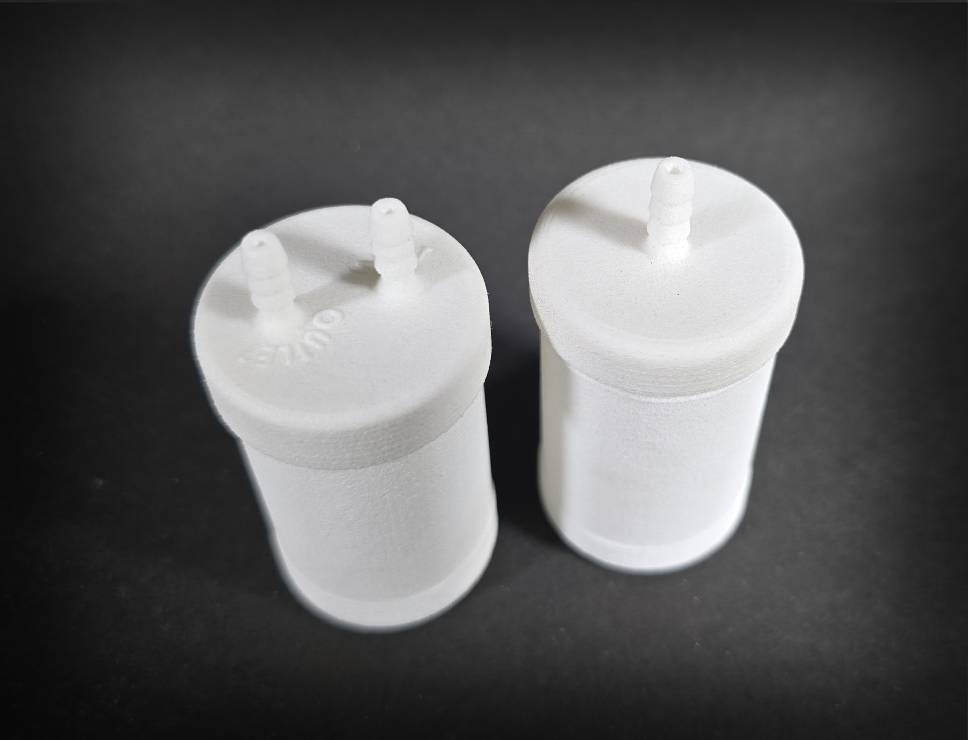
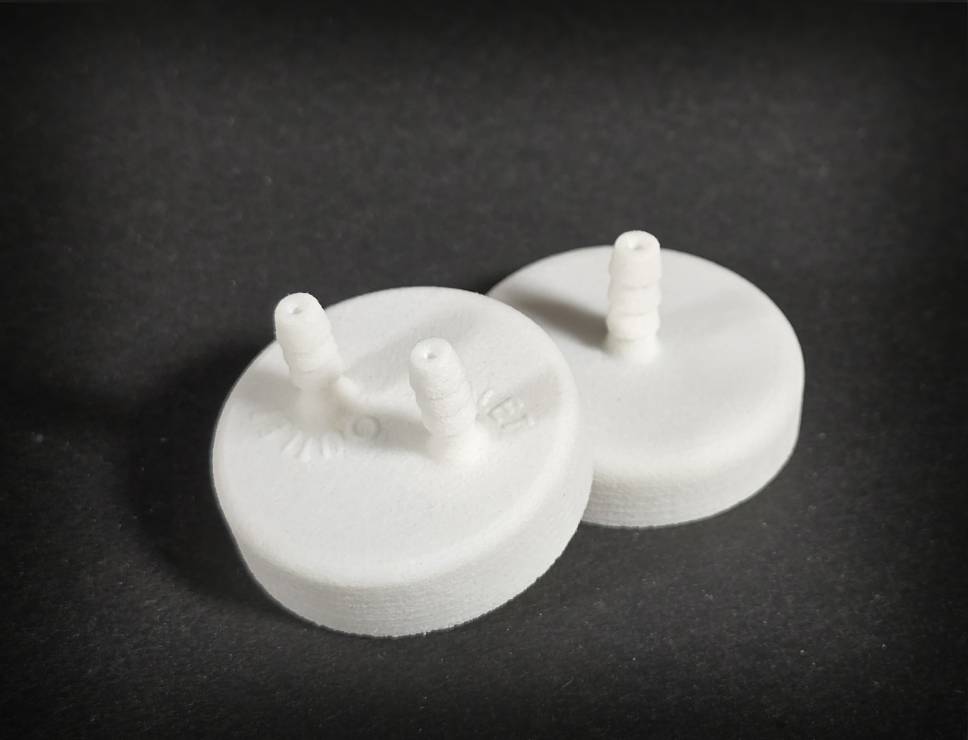
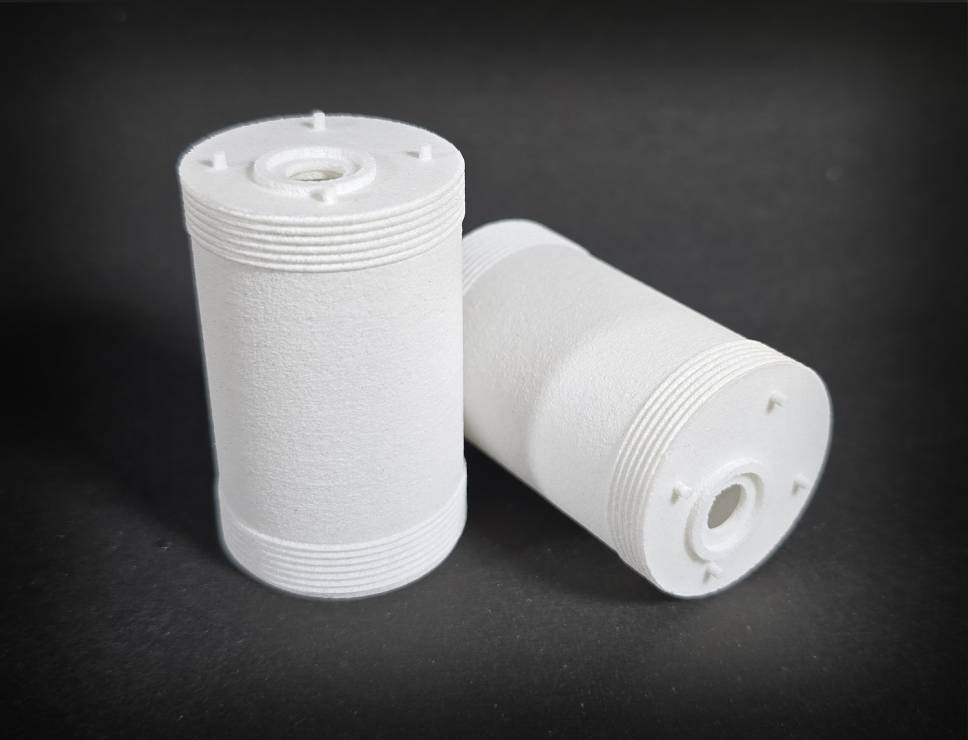


Nylon PA2200 SLS is a polyamide 12 (PA12) powder used in Selective Laser Sintering (SLS) 3D printing, making it one of the most trusted SLS nylon materials for industrial applications. It is renowned for its balanced mechanical properties, including strength, toughness, and flexibility. This Nylon PA2200 material offers high detail resolution and smooth surface finishes, suitable for functional prototypes, complex geometries, and end-use parts. As a proven SLS nylon material, it exhibits good chemical resistance and thermal stability, allowing parts to perform well in various environments. Order Nylon PA2200 SLS 3D prints in India through iamRapid.


 SLS compatibleHigh Mechanical StrengthGood Flexibility and Impact
ResistanceExcellent Chemical ResistanceBiocompatibility (meets ISO 10993 and USP
Class VI)
SLS compatibleHigh Mechanical StrengthGood Flexibility and Impact
ResistanceExcellent Chemical ResistanceBiocompatibility (meets ISO 10993 and USP
Class VI) Porous Surface (can absorb
moisture)Limited UV ResistanceNatural Color Only (requires
post-processing for color)
Porous Surface (can absorb
moisture)Limited UV ResistanceNatural Color Only (requires
post-processing for color)
Key Nylon PA2200 properties rated to guide you in selecting the best fit for your 3D printing needs.
Nylon PA2200 is ideal for producing functional prototypes and end-use parts that require a balance of strength, flexibility, and chemical resistance. Its versatility makes it suitable for a wide range of industries and applications.
Functional prototypesHousings and enclosuresJigs and fixturesAir ductsSnap-fit componentsLightweight structuresOrthopedic modelsProstheticsSurgical instrumentsSporting goodsElectronic casingsCustomized accessoriesComplex GeometriesLiving HingesFluid Flow Components
Offers a balanced combination of strength, flexibility, and toughness, suitable for functional applications.
| Property | Value, metric |
|---|---|
| Tensile Strength | Approximately 48 MPa |
| Tensile Modulus | Approximately 1,700 MPa |
| Elongation at Break (%) | 20% |
| Flexural Strength | Approximately 58 MPa |
| Flexural Modulus | Approximately 1,500 MPa |
| Notched Izod Impact Strength | Approximately 4 kJ/m^2 |
| Shore Hardness | Shore D 75 |
Printing with Nylon PA2200 involves using SLS technology, where a laser sinters thin layers of powder to form solid parts. The process does not require support structures, allowing for complex designs. Post-processing can include bead blasting, tumbling, and dyeing.
| Type | Value |
|---|---|
| Lead Time | 2-7 business days |
| Wall Thickness | Minimum 0.7 mm |
| Tolerance | ±0.3%, minimum ±0.3 mm |
| Max Part Size | Up to 600x 600 x 450 mm |
| Layer Height | - |
Exhibits good thermal stability and can withstand moderate temperatures without significant deformation.
| Property | Value, metric |
|---|---|
| Heat Deflection Temperature (HDT) | Approximately 95°C at 1.8 MPa |
| Thermal Expansion Coefficient | Approximately 100 x 10^-6 /°C |
| Thermal Conductivity | Approximately 0.1 W/m·K |
| Max Service Temperature | Up to 80°C for continuous use |
Acts as an electrical insulator with good dielectric properties, suitable for electrical and electronic components.
| Property | Value, metric |
|---|---|
| Dielectric Strength | Approximately 30 kV/mm |
| Dielectric Constant (1 MHz) | Approximately 3.7 |
| Volume Resistivity | Approximately 10^12 Ω·cm |
| ESD Safety | Not ESD safe without treatment |
 NOTE: The provided
values are approximate and can vary
based on the specific Nylon PA2200 formulation and
manufacturer. Always refer to the manufacturer's technical data
sheet for precise information.
NOTE: The provided
values are approximate and can vary
based on the specific Nylon PA2200 formulation and
manufacturer. Always refer to the manufacturer's technical data
sheet for precise information.

