Discover Castable Resin—a specialized SLA 3D printing photopolymer resin enabling clean burnout for investment casting, perfect
for intricate jewelry, dental restorations, and precise castable models requiring zero ash content.
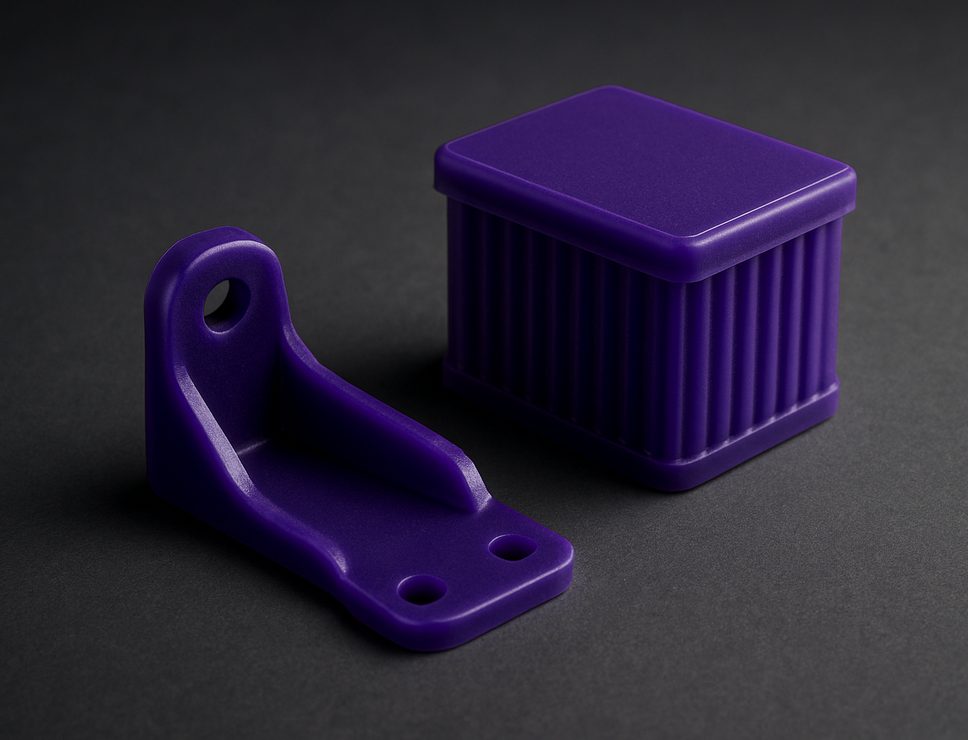
Material Name:
Castable Resin
Description:
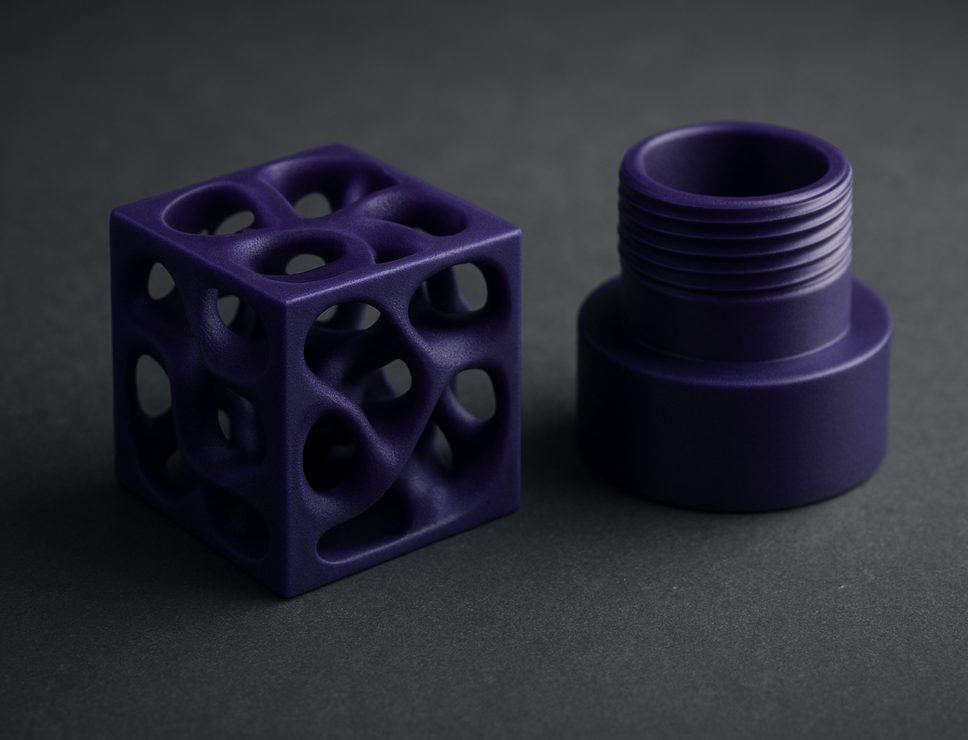
Castable Resin is a 3D printing material formulated for direct investment casting applications. It burns out cleanly without
leaving ash or residue, making it ideal for creating detailed patterns for jewelry, dental prosthetics,
and engineering components. This resin captures intricate details and smooth surfaces, ensuring
high-quality castings.
Material Type:
Castable Photopolymer Resin
Price:
Available color:
Blue
Purple
Green
Process compatibility:
SLA compatible
DLP compatible
Special Properties:
Clean Burnout with Zero Ash Content
High Detail Resolution
Smooth Surface Finish
Compatible with Standard Investment Casting
Processes
Limitations:
Brittle Nature
Requires Specific Casting
Procedures
UV Sensitivity
Not Suitable for Functional
Prototypes
Material rating
Key Castable Resin properties rated to guide you in selecting the best fit for your 3D printing needs.
Strength2 of 5
Flexibility1 of 5
Detail Resolution5 of
5
Surface Smoothness5 of
5
Heat Resistance1 of 5
Chemical Resistance2 of
5
Ease of Printing3 of 5
Cost Efficiency2 of 5
Applications
Castable Resin is ideal for producing patterns for investment casting processes. It
allows the creation of complex geometries and fine details, suitable for industries requiring precise
castings.
Designed for casting applications rather than mechanical strength; parts are brittle and intended to be
burned out during the casting process.
Property
Value, metric
Tensile Strength
Approximately 20 MPa
Tensile Modulus
Approximately 1,500 MPa
Elongation at Break (%)
2%
Flexural Strength
Approximately 25 MPa
Flexural Modulus
Approximately 1,200 MPa
Notched Izod Impact Strength
Approximately 10 J/m
Shore Hardness
Shore D 80
Characteristics
Printing with Castable Resin requires careful handling and optimized settings to capture
fine details. Post-processing includes cleaning, UV curing, and specific burnout schedules to ensure clean
casting results.
Type
Value
Lead Time
2-5 business days
Wall Thickness
Minimum 0.5 mm
Tolerance
±0.05%, minimum ±0.02 mm
Max Part Size
Up to 600x 600 x 450 mm
Layer Height
-
Thermal Properties
Not designed for thermal resistance; intended to burn out cleanly during casting.
Property
Value, metric
Heat Deflection Temperature (HDT)
Approximately 40°C at 0.455 MPa
Thermal Expansion Coefficient
Approximately 80 x 10^-6 /°C
Thermal Expansion (Scale 0-100)
70
Max Service Temperature
Up to 35°C before significant deformation may occur
Electrical Properties
Not typically relevant due to intended use in casting processes.
NOTE: The provided
values are approximate and can vary
based on the specific Castable Resin formulation and
manufacturer. Always refer to the manufacturer's technical data
sheet for precise information.
Find your queries
Frequently Asked Question(FAQ)
General
Printing
Post-procesing
Troubleshooting
Advanced
What is Castable Resin, and what are its main characteristics?
Castable Resin is a photopolymer resin designed for SLA 3D printing, formulated to burn out
cleanly without leaving ash or residue, making it ideal for investment casting applications.
How does Castable Resin differ from standard resin?
Unlike standard resins, Castable Resin is engineered to combust completely during the burnout
process, leaving no ash that could interfere with casting.
Is Castable Resin suitable for functional prototypes?
No, Castable Resin is brittle and intended for creating patterns for casting rather than
functional parts.
Can Castable Resin be used with standard investment casting processes?
Yes, it is compatible with standard investment casting procedures, but specific burnout
schedules may be required to ensure a clean burnout.
What colors are available for Castable Resin?
It is typically available in colors like blue, purple, or green, which help in visualizing fine
details.
Are there any special considerations when printing with Castable Resin?
Yes, optimized printer settings are necessary to capture fine details, and the resin may require
agitation before use to ensure uniformity.
What layer height is recommended for printing with Castable Resin?
Layer heights between 25-50 microns are recommended to achieve high detail resolution.
Do I need to adjust exposure settings for Castable Resin?
Yes, consult the manufacturer's guidelines for optimal exposure settings, as they may differ
from standard resins.
Can I print large parts with Castable Resin?
It is best suited for small to medium-sized parts due to its brittle nature and the requirements
of the casting process.
Is an open or closed resin system better for printing with Castable Resin?
Either system can be used, but ensure the resin is protected from light and contaminants.
How should I handle Castable Resin prints during post-processing?
Handle with care to avoid damaging fine details. Use gloves to protect your skin from uncured
resin.
How long should I UV cure Castable Resin prints?
Curing times may vary, but typically 30-60 minutes under a UV lamp is recommended to ensure the
resin is fully cured before casting.
Do I need to use a specific burnout schedule for Castable Resin?
Yes, follow the manufacturer's recommended burnout schedule to ensure a clean burnout without
ash or residue.
Can I apply surface treatments to Castable Resin prints before casting?
Some users apply a thin layer of investment spray or similar treatments to improve surface
finish. Always test to ensure compatibility.
How do I remove support structures without damaging the print?
Use fine tools to carefully remove supports, and consider using minimal supports in critical
areas.
Why are my Castable Resin prints cracking during burnout?
Cracking can result from rapid temperature changes. Follow the recommended burnout schedule to
ensure gradual heating.
What causes surface imperfections in my castings?
Imperfections can result from incomplete burnout, improper investment, or issues with the
casting process. Ensure all steps are performed correctly.
How do I prevent ash residue in my castings?
Ensure the burnout schedule is properly followed, allowing sufficient time and temperature for
the resin to combust completely.
Why are my prints brittle and breaking easily?
Castable Resin is inherently brittle. Handle prints carefully and design models with adequate
thickness.
How do I fix incomplete casting fills?
Ensure the mold is properly vented, the investment material is free of air bubbles, and the
casting material is at the correct temperature.
Can Castable Resin be mixed with other resins to adjust properties?
Mixing resins is not recommended as it can interfere with the burnout process and compromise
casting quality.
Is Castable Resin suitable for casting all types of metals?
It is compatible with a range of metals commonly used in investment casting, such as gold,
silver, bronze, and certain alloys. Verify compatibility with your specific casting material.
How does humidity affect printing with Castable Resin?
High humidity can affect resin curing and print quality. Print in a controlled environment with
low humidity.
Can I use Castable Resin for lost wax casting processes?
Yes, Castable Resin is designed to replace traditional wax patterns in lost wax casting.
How should I store Castable Resin to maintain its properties?
Store in its original, sealed container, away from light, heat sources, and moisture.
Explore Related 3D Printing Materials
This material is used with SLA 3D printing technology. Explore other materials that may suit your project: