




-
How it works

-
Industries
-
Services
-
Material
-
Company
-
Resources
 sushant@iamrapid.com
 +91
8629044664
+91
8629044664








 Basic
Industries
Services
Resources
Basic
Industries
Services
Resources
Aluminium 3D printing with AlSi10Mg alloy delivers lightweight, strong parts through Direct Metal Laser Sintering (DMLS). iamRapid offers metal 3D printing in India with this high-performance aluminium alloy, providing excellent thermal properties, superior strength-to-weight ratio, and corrosion resistance for aerospace, automotive, and engineering applications.
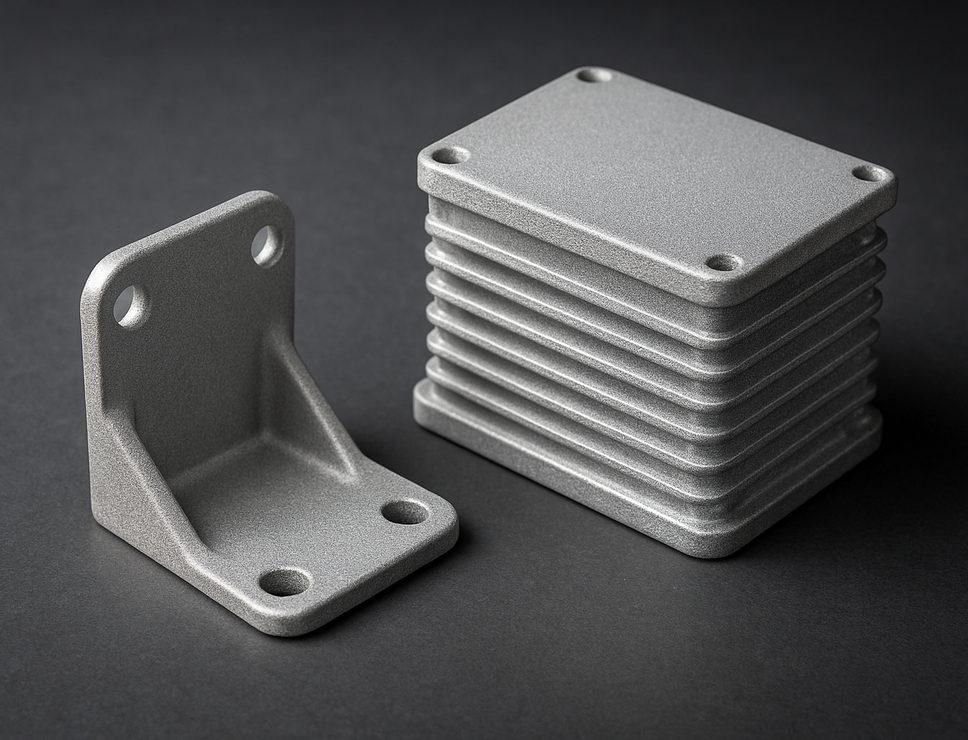
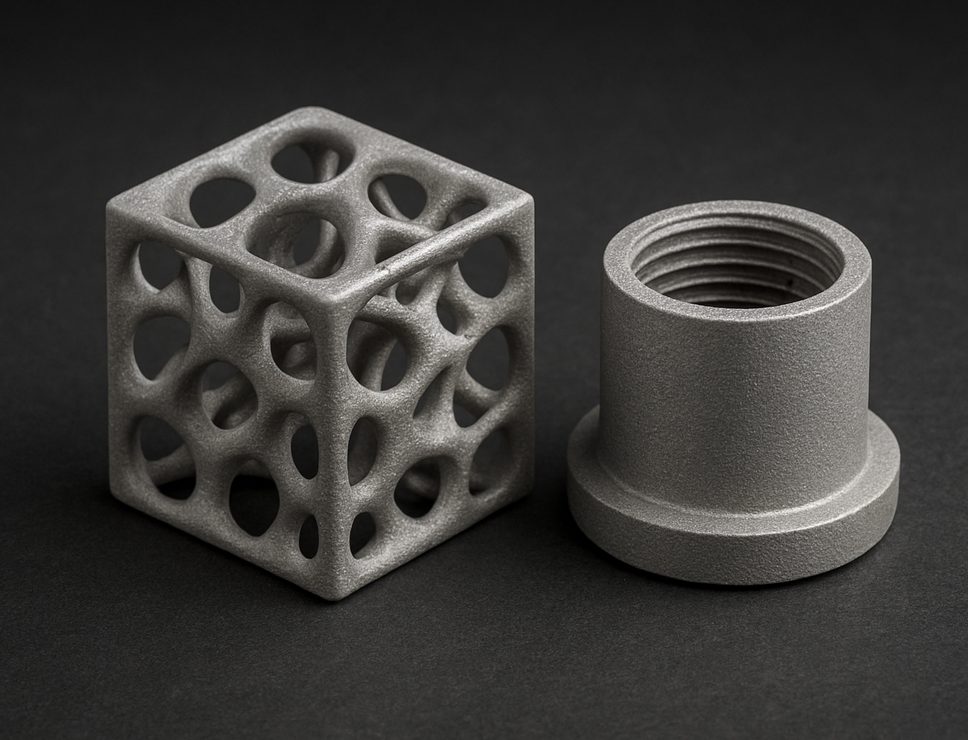
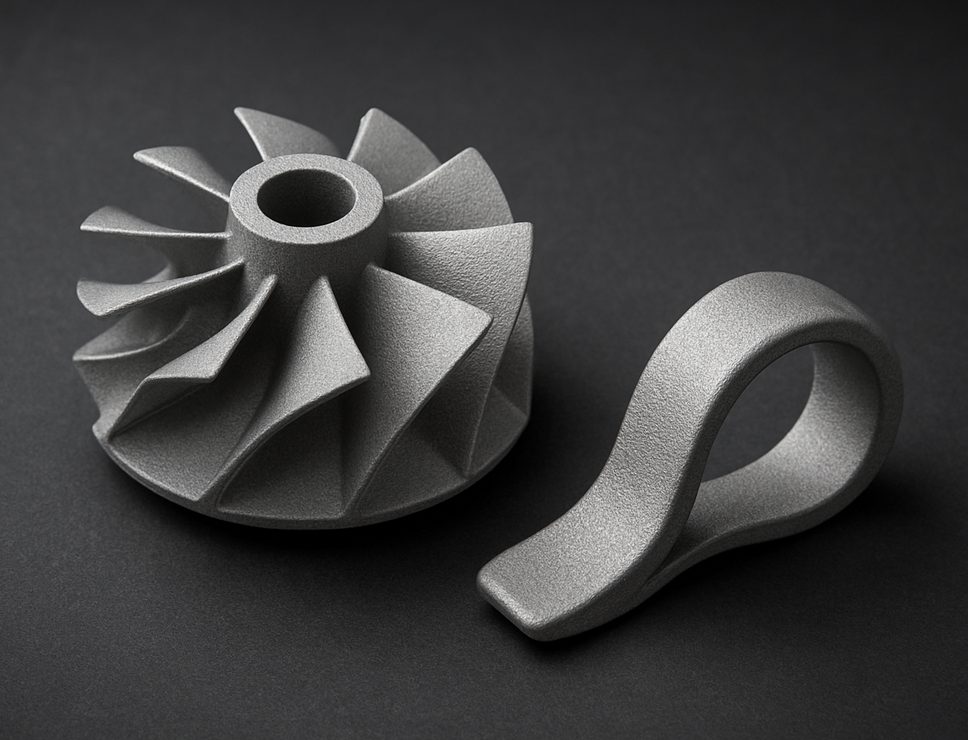


AlSi10Mg is a premium aluminium alloy powder used for aluminium 3D printing via DMLS technology. It combines good strength, low weight, and excellent thermal properties, making it a top choice for metal 3D printing applications. The alloy is similar to traditional casting alloys, suitable for manufacturing complex geometries that would be difficult to produce with conventional methods. AlSi10Mg exhibits good corrosion resistance and is ideal for parts requiring high strength and low weight. Order aluminium 3D printing services in India through iamRapid for aerospace, automotive, and heat-exchange components.


 DMLS compatibleHigh Strength-to-Weight RatioGood Thermal ConductivityHigh Detail ResolutionWeldable and Heat-TreatableGood Fatigue Resistancer
 Requires Heat Treatment for Optimal
PropertiesHigh Reflectivity Requires
Specialized EquipmentLimited Ductility Compared to Wrought
AlloysAnisotropy in Mechanical
Properties
Requires Heat Treatment for Optimal
PropertiesHigh Reflectivity Requires
Specialized EquipmentLimited Ductility Compared to Wrought
AlloysAnisotropy in Mechanical
Properties
Key Aluminium ALSi10mg properties rated to guide you in selecting the best fit for your 3D printing needs.
AlSi10Mg is ideal for producing functional prototypes and end-use parts that require a combination of high strength, low weight, and good thermal properties. It is widely used in industries such as aerospace, automotive, and engineering for complex geometries and lightweight components.
Structural componentsHeat exchangersBrackets and mountsEngine partsLightweight framesThermal management componentsFunctional prototypesTooling and fixturesComplex geometriesSporting equipmentElectronic housingsCustom componentsRobotics ComponentsMedical Devices (Non-implant)High-Performance Parts
Offers a good balance of strength and weight, suitable for functional parts requiring structural integrity.
| Property | Value, metric |
|---|---|
| Tensile Strength | Approximately 400 MPa |
| Tensile Modulus | Approximately 70,000 MPa |
| Elongation at Break (%) | 20% |
| Flexural Strength | Approximately 420 MPa |
| Flexural Modulus | Approximately 70,000 MPa |
| Notched Izod Impact Strength | Approximately 3.5 kJ/m^2 |
| Hardness | 119 HBW |
Printing with AlSi10Mg involves DMLS technology, where a high-power laser fuses aluminum alloy powder layer by layer. The process requires specialized equipment due to aluminum's reflectivity and thermal conductivity. Post-processing may include stress relief annealing, heat treatment, machining, and surface finishing to achieve desired properties and surface quality.
| Type | Value |
|---|---|
| Lead Time | 2-15 business days |
| Wall Thickness | Minimum 0.5 mm |
| Tolerance | ±0.1%, minimum ±0.1 mm |
| Max Part Size | Up to 250x 250 x 325 mm |
| Layer Height | - |
Exhibits good thermal stability and can withstand moderate temperatures without significant deformation.
| Property | Value, metric |
|---|---|
| Heat Deflection Temperature (HDT) | Approximately 95°C at 0.45 MPa |
| Thermal Expansion Coefficient | Approximately 100 x 10^-6 /°C |
| Thermal Conductivity | Approximately 0.1 W/m·K |
| Max Service Temperature | Up to 80°C for continuous use |
Good electrical conductivity, suitable for components requiring electrical pathways.
| Property | Value, metric |
|---|---|
| Dielectric Strength | Approximately 30 kV/mm |
| Dielectric Constant (1 MHz) | Approximately 3.7 |
| Volume Resistivity | Approximately 10^12 Ω·cm |
| ESD Safety | Not ESD safe without treatment |
 NOTE: The provided
values are approximate and can vary
based on the specific Aluminium AlSi10Mg formulation and
manufacturer. Always refer to the manufacturer's technical data
sheet for precise information.
NOTE: The provided
values are approximate and can vary
based on the specific Aluminium AlSi10Mg formulation and
manufacturer. Always refer to the manufacturer's technical data
sheet for precise information.
| Property | Aluminium AlSi10Mg | Titanium Ti6Al4V | Stainless Steel 316L |
|---|---|---|---|
| Cost (₹/cm³) | ₹200-280 | ₹250-450 | ₹200-320 |
| Tensile Strength | 460 MPa | 950 MPa | 600 MPa |
| Density (g/cm³) | 2.67 | 4.43 | 8.0 |
| Best For | Lightweight structural parts | Medical, aerospace, high-strength | General engineering, corrosion resistance |
All metal options available via DMLS printing at iamRapid. Upload your CAD file for instant pricing.

