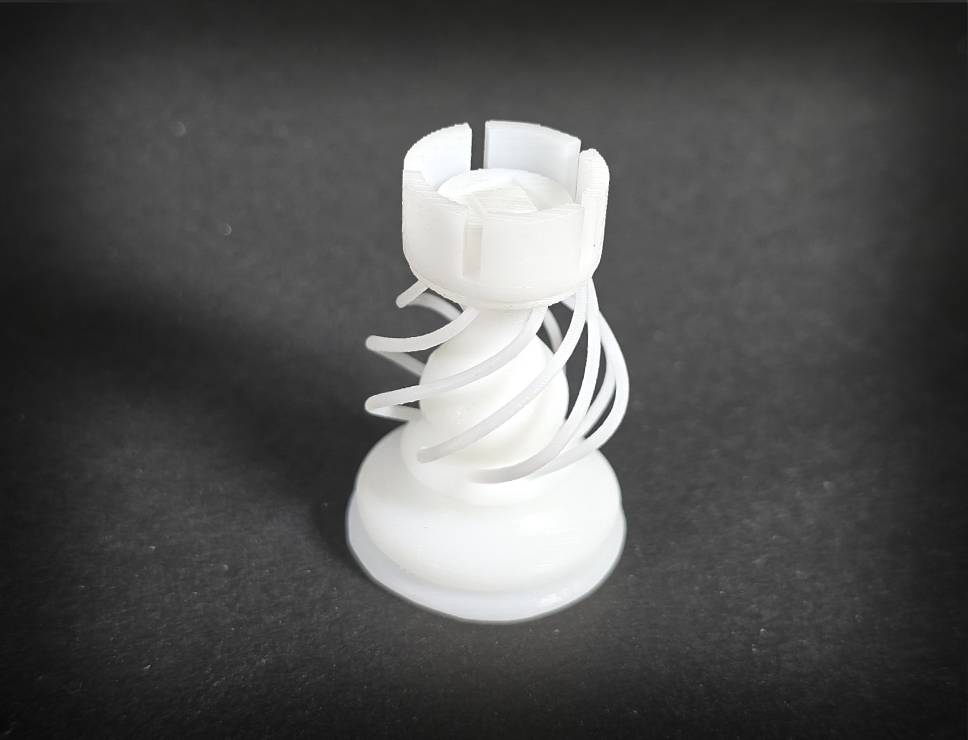
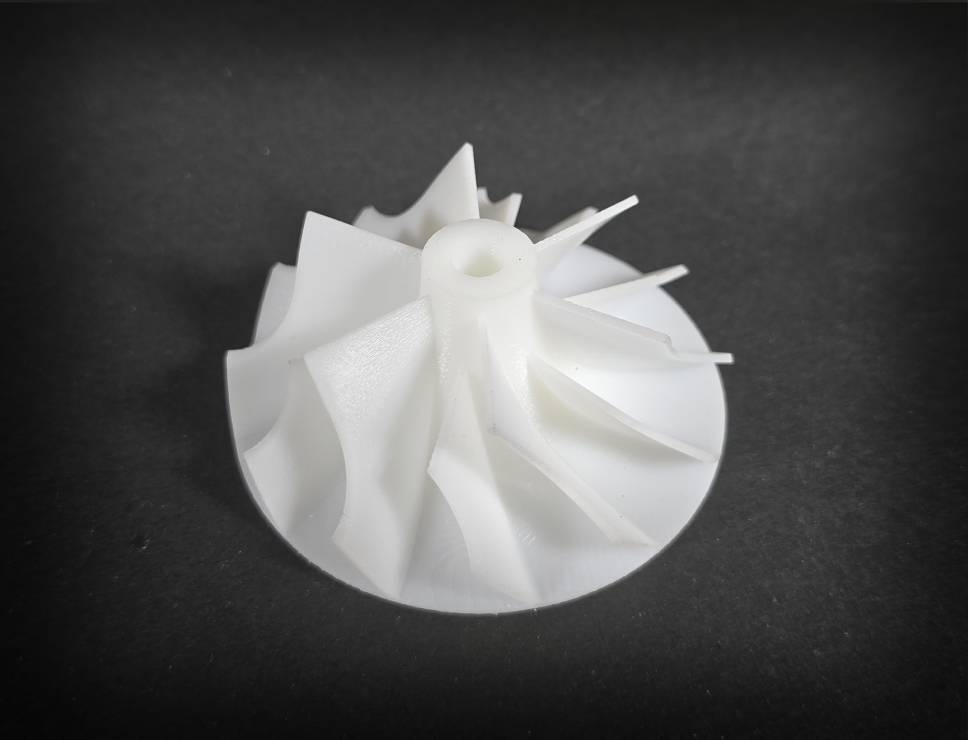
Discover ABS-like Resin (UTR 9000)—a high-performance photopolymer
resin for SLA 3D printing offering excellent mechanical properties, toughness, and smooth
surface finishes, ideal for functional prototypes and end-use parts
requiring the durability of ABS plastic.
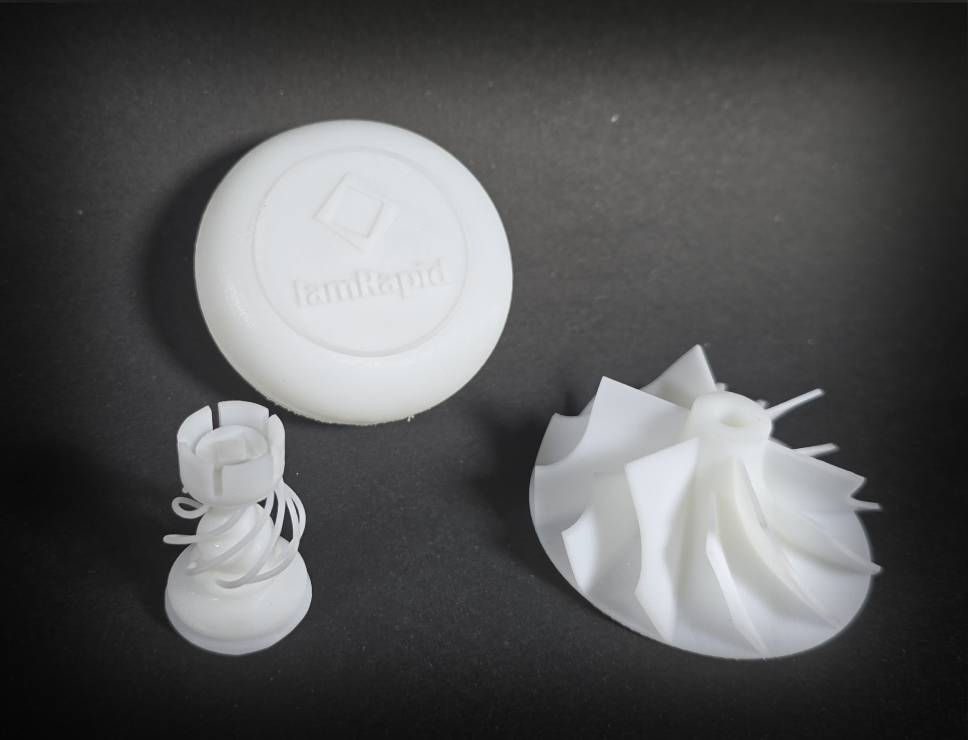
Material Name:
ABS-like Resin (UTR 9000)
Description:
ABS-like Resin (UTR 9000) is a specialized photopolymer resin
designed for Stereolithography (SLA) 3D printing. It mimics the
mechanical properties of ABS thermoplastic, providing high
strength, impact resistance, and toughness. This resin is
formulated to produce parts with smooth surface finishes and
fine details, making it suitable for functional prototypes,
mechanical assemblies, and end-use components. ABS-like Resin
(UTR 9000) offers improved thermal stability and less
brittleness compared to standard resins, allowing printed parts
to withstand more demanding applications. Its balanced
properties make it an excellent choice for engineers and
designers seeking to create durable, accurate models that
closely replicate injection-molded ABS parts.
Material Type:
High-Performance Photopolymer Resin
Price:
Available color:
Gray
Beige
White
Black
Process compatibility:
SLA compatible
DLP compatible
Special Properties:
High Impact Resistance
Enhanced Toughness
Smooth Surface Finish
Good Thermal Stability
Limitations:
UV Sensitivity
Requires Post-Curing
Less Flexible than ABS Plastic
Limited Chemical Resistance
Material rating
Key Standard Resin properties rated to guide you in selecting the
best fit for your 3D printing needs.
Strength4
of 5
Flexibility3 of 5
Detail Resolution5 of 5
Surface Smoothness5 of 5
Heat Resistance3 of 5
Chemical Resistance3 of 5
Ease of Printing4 of 5
Cost Efficiency3 of 5
Applications
ABS-like Resin (UTR 9000) is ideal for producing functional
prototypes, mechanical parts, and end-use components that require
the toughness and durability of ABS plastic. Its mechanical
properties make it suitable for applications where standard resins
would be too brittle.
Automotive Applications
Functional prototypes
Interior components
Snap-fit assemblies
Consumer Products Applications
Electronic housings
Tool handles
Wearable device components
Engineering Prototypes
Mechanical assemblies
Functional testing models
Enclosures and casings
Manufacturing Aids Applications
Jigs and fixtures
Custom tooling
Assembly aids
Additional Applications
Durable Parts
Functional Models
End-Use Components
Mechanical Properties
Provides high strength and impact resistance, closely resembling
the mechanical properties of ABS plastic.
Property
Value, metric
Tensile Strength
Approximately 55 MPa
Tensile Modulus
Approximately 2,200 MPa
Elongation at Break (%)
10%
Flexural Strength
Approximately 90 MPa
Flexural Modulus
Approximately 2,300 MPa
Notched Izod Impact Strength
Approximately 50 J/m
Shore Hardness
Shore D 85
Characteristics
Printing with ABS-like Resin (UTR 9000) requires standard SLA
procedures, including careful handling of the resin and
post-processing steps. The resin cures under specific wavelengths
of light, producing high-resolution prints with excellent
mechanical properties. Post-processing involves cleaning and UV
curing to achieve optimal strength and stability.
Type
Value
Lead Time
2-5 business days
Wall Thickness
Minimum 0.8 mm
Tolerance
±0.1%, minimum ±0.05 mm
Max Part Size
Up to 600x 600 x 450 mm
Layer Height
0.025 mm to 0.1 mm
Thermal Properties
Offers better thermal stability than standard resins, suitable for
parts exposed to moderate temperatures.
Property
Value, metric
Heat Deflection Temperature (HDT)
Approximately 65°C at 0.455 MPa
Thermal Expansion Coefficient
Approximately 75 x 10^-6 /°C
Thermal Expansion (Scale 0-100)
65
Max Service Temperature
Up to 60°C before significant deformation may occur
Electrical Properties
Acts as an electrical insulator with moderate dielectric
properties, suitable for non-conductive components.
Property
Value, metric
ESD Safety
Not ESD safe
Conductivity
Non-conductive; insulating properties
NOTE: The provided
values are approximate and can vary
based on the specific ABS-like Resin formulation
and manufacturer. Always refer to the manufacturer's technical
data sheet for precise information.
Find your queries
Frequently Asked Question(FAQ)
General
Printing
Post-procesing
Troubleshooting
Advanced
What is ABS-like Resin (UTR 9000), and what are its main
characteristics?
ABS-like Resin (UTR 9000) is a photopolymer resin
designed to mimic the mechanical properties of ABS
plastic, offering high strength, toughness, and impact
resistance for SLA 3D printing.
How does ABS-like Resin (UTR 9000) compare to standard
resin?
It provides superior mechanical properties, including
higher impact resistance and flexibility, making it
suitable for functional parts, whereas standard resin is
more brittle and better suited for visual
prototypes.
Is ABS-like Resin (UTR 9000) suitable for functional
prototypes?
Yes, its enhanced mechanical properties make it ideal for
creating functional prototypes and end-use parts that
require durability and toughness.
Can ABS-like Resin (UTR 9000) replace ABS plastic in all
applications?
While it closely replicates ABS properties, it may not
match ABS in heat resistance and long-term durability.
It's suitable for many applications but should be
evaluated based on specific requirements.
Is ABS-like Resin (UTR 9000) biocompatible or safe for
medical use?
Unless specifically certified, it is not recommended for
medical or biocompatible applications. Always refer to the
manufacturer's guidelines for safety information.
What are the ideal printing settings for ABS-like Resin
(UTR 9000)?
Settings vary by printer, but generally, layer heights
between 25-100 microns, normal exposure times of 8-15
seconds per layer, and bottom layer exposure times of
40-60 seconds are common starting points.
Do I need a specific type of printer to use ABS-like
Resin (UTR 9000)?
It's compatible with SLA and DLP printers that can handle
the resin's specific curing wavelength, typically around
405 nm.
How important is printer calibration when using ABS-like
Resin (UTR 9000)?
Calibration is crucial to ensure dimensional accuracy and
optimal mechanical properties. Regularly calibrate the
build platform and adjust exposure settings as
needed.
Does ABS-like Resin (UTR 9000) require special handling
during printing?
Standard resin handling precautions apply, including
wearing gloves and working in a well-ventilated area. Stir
the resin before use to ensure uniform consistency.
Can I mix ABS-like Resin (UTR 9000) with other
resins?
Mixing with other resins is not recommended as it can
alter the material properties and curing characteristics,
leading to unpredictable results.
What post-processing steps are required after printing
with ABS-like Resin (UTR 9000)?
After printing, parts should be rinsed in isopropyl
alcohol (IPA) to remove uncured resin, then post-cured
under UV light to achieve full mechanical strength.
How long should I UV cure ABS-like Resin (UTR 9000)
prints?
Typically, curing for 20-40 minutes under a UV lamp or
sunlight is sufficient. Follow the manufacturer's
recommendations for optimal results.
Can ABS-like Resin (UTR 9000) prints be painted or
finished?
Yes, prints can be sanded, primed, and painted using
paints suitable for plastics. The smooth surface finish
aids in achieving high-quality finishes.
How do I safely dispose of leftover resin and cleaning
solvents?
Uncured resin and contaminated solvents should be treated
as hazardous waste. Dispose of them according to local
regulations and never pour them down the drain.
How do I remove support structures from ABS-like Resin
(UTR 9000) prints?
Supports can be carefully removed using flush cutters or
sanding tools. Heating the supports slightly can make
removal easier without damaging the part.
Why are my prints warping or deforming during
printing?
Warping can occur due to overexposure or insufficient
support. Adjust exposure times and ensure adequate support
structures are in place.
What causes layer separation or delamination in
prints?
Layer separation can result from underexposure, incorrect
layer thickness settings, or mechanical issues with the
printer. Verify settings and equipment
functionality.
How do I fix surface defects like layer lines or rough
textures?
Surface defects can be minimized by adjusting layer
height, exposure settings, and ensuring the resin is
well-mixed and free of contaminants.
Why are my prints sticky after post-curing?
Sticky surfaces indicate incomplete curing. Extend the UV
curing time and ensure all surfaces are exposed to the
light evenly.
What causes dimensional inaccuracies in my prints?
Dimensional errors can stem from incorrect calibration,
overexposure, or thermal shrinkage during curing.
Recalibrate the printer and adjust settings as
needed.
Can ABS-like Resin (UTR 9000) be used for injection
molding prototypes?
Yes, it can be used to create molds or prototypes for
injection molding due to its mechanical strength and
thermal stability, but consider the resin's heat
deflection temperature.
Is it possible to tap threads or machine ABS-like Resin
(UTR 9000) parts?
Yes, parts can be machined, drilled, or tapped with
appropriate tools, but care should be taken to avoid
cracking due to the material's brittleness compared to
traditional plastics.
How does humidity affect the printing process with
ABS-like Resin (UTR 9000)?
High humidity can interfere with resin curing and affect
print quality. It's best to print in a controlled
environment with low humidity.
Can I use ABS-like Resin (UTR 9000) for casting
applications?
While it's not specifically designed for casting, it can
be used for creating master patterns in silicone molding
or low-temperature casting processes.
How do I store ABS-like Resin (UTR 9000) when not in
use?
Store the resin in its original, opaque container,
tightly sealed, and away from direct sunlight or heat
sources to maintain its shelf life and performance.
Explore Related 3D Printing Materials
This material is used with SLA 3D printing technology. Explore other materials that may suit your project: